📦 FREE SHIPPING OVER 120 RON
Order Tracking Individuals / Sales: 0745 200 357 / Orders Legal Entities: 0721 722 783
Manuscript proposals: [email protected] : 0745 204 115

 EN
EN  Romana
6359.png "Editura Universitară") Romanian and Turkish Paremiological Structures. A Contrastive-Typological Analysis
Romanian and Turkish Paremiological Structures. A Contrastive-Typological Analysis
![Romanian and Turkish Paremiological Structures. A Contrastive-Typological Analysis [0]](https://gomagcdn.ro/domains/editurauniversitara.ro/files/product/medium/structuri-paremiologice-romanesti-si-turcesti-o-analiza-contrastiv-tipologica-979911.jpg "Romanian and Turkish Paremiological Structures. A Contrastive-Typological Analysis [0]")
![Romanian and Turkish Paremiological Structures. A Contrastive-Typological Analysis [1]](https://gomagcdn.ro/domains/editurauniversitara.ro/files/product/medium/structuri-paremiologice-romanesti-si-turcesti-o-analiza-contrastiv-tipologica-714137.jpg "Romanian and Turkish Paremiological Structures. A Contrastive-Typological Analysis [1]")
![Romanian and Turkish Paremiological Structures. A Contrastive-Typological Analysis [1]](https://gomagcdn.ro/domains/editurauniversitara.ro/files/product/original/structuri-paremiologice-romanesti-si-turcesti-o-analiza-contrastiv-tipologica-979911.jpg "Romanian and Turkish Paremiological Structures. A Contrastive-Typological Analysis [1]")
![Romanian and Turkish Paremiological Structures. A Contrastive-Typological Analysis [2]](https://gomagcdn.ro/domains/editurauniversitara.ro/files/product/original/structuri-paremiologice-romanesti-si-turcesti-o-analiza-contrastiv-tipologica-714137.jpg "Romanian and Turkish Paremiological Structures. A Contrastive-Typological Analysis [2]")
Publisher: Editura Universitară
Author: Emel M. Ismail
Publisher year: 2026
Edition: I
Pages:
ISBN: 978-606-28-2253-8
DOI: https://doi.org/10.5682/9786062822538
Product Code:
9786062822538
Do you need help?
0745 200 357
- Description
- More details
- Content
- Authors
- Reviews (0)
The premise of Emel Ismail’s book concerns the general-versus-particular dynamic in the expression of value judgments that are relatively comparable—if not identical—across two languages belonging to fundamentally different structural types: Turkish (an agglutinative language) and Romanian (an inflectional language). More specifically, the study considers how every language must fully leverage its lexico-semantic, morphosyntactic, and pragmatic-stylistic resources to express universally valid truths, selecting specific formulas that adhere to the rather fixed—and sometimes rigid—patterns characteristic of proverbs. Examining how each language navigates these formal constraints can yield further insight into its specific lexical, semantic, grammatical, and stylistic capabilities.
If you want to express your opinion about this product you can add a review.
write a review
Similar products
Hello, Kinder! German for beginners - Evemarie Draganovici, Andreea Rusen


English without teacher & 2 audio CDs. Instant method - Sandra Stevens
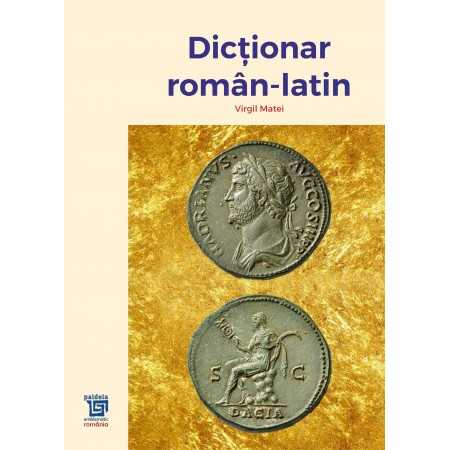
Romanian-Latin dictionary - Virgil Matei
Romanian-English/English-Romanian legal dictionary. Second edition - Honorina Botezat