📦 FREE SHIPPING OVER 120 RON
Order Tracking Individuals / Sales: 0745 200 357 / Orders Legal Entities: 0721 722 783
Manuscript proposals: [email protected] : 0745 204 115

 EN
EN  Romana
6359.png "Editura Universitară") Psychology. Grid tests for the license exam, 4th ed
Psychology. Grid tests for the license exam, 4th ed
![Psychology. Grid tests for the license exam, 4th ed [0]](https://gomagcdn.ro/domains/editurauniversitara.ro/files/product/medium/psihologie-teste-grila-pentru-examenul-de-licenta-ed-a-iv-a-862491.jpg "Psychology. Grid tests for the license exam, 4th ed [0]")
![Psychology. Grid tests for the license exam, 4th ed [1]](https://gomagcdn.ro/domains/editurauniversitara.ro/files/product/medium/psihologie-teste-grila-pentru-examenul-de-licenta-ed-a-iv-a-675570.jpg "Psychology. Grid tests for the license exam, 4th ed [1]")
![Psychology. Grid tests for the license exam, 4th ed [1]](https://gomagcdn.ro/domains/editurauniversitara.ro/files/product/original/psihologie-teste-grila-pentru-examenul-de-licenta-ed-a-iv-a-862491.jpg "Psychology. Grid tests for the license exam, 4th ed [1]")
![Psychology. Grid tests for the license exam, 4th ed [2]](https://gomagcdn.ro/domains/editurauniversitara.ro/files/product/original/psihologie-teste-grila-pentru-examenul-de-licenta-ed-a-iv-a-675570.jpg "Psychology. Grid tests for the license exam, 4th ed [2]")
Publisher: Editura Universitară
Author: coord.: Mihai Covaci, Marinela Sirbu
Edition: IV
Pages: 292
Publisher year: 2024
ISBN: 978-606-28-1914-9
DOI: 10.568/9786062819149
Product Code:
9786062819149
Do you need help?
0745 200 357
- Description
- Authors
- Content
- More details
- Reviews (0)
FOREWORD/7
PSYCHOLOGY OF EDUCATION/9
INTERCULTURAL PSYCHOLOGY/29
CLINICAL PSYCHOLOGY/47
FUNDAMENTALS OF PSYCHOLOGY I/71
SOCIAL PSYCHOLOGY/81
GROUP DYNAMICS/92
FUNDAMENTALS OF PSYCHOLOGY II/113
EXPERIMENTAL PSYCHOLOGY/136
PSYCHOTHERAPY/147
THEORETICAL BASIS OF PSYCHOLOGICAL ASSESSMENT/161
PERSONALITY PSYCHODIAGNOSIS/169
PSYCHODIAGNOSIS OF ATTITUDES AND INTELLIGENCE/181
CHILD AND ADOLESCENT PSYCHOLOGY/190
PERSONALITY PSYCHOLOGY/203
ADULT AND ELDERLY PSYCHOLOGY/216
ORGANIZATIONAL AND MANAGERIAL PSYCHOLOGY/230
WORK PSYCHOLOGY/244
PSYCHODIAGNOSIS OF ATTITUDES AND INTELLIGENCE/257
NEUROPSYCHOLOGY/269
COGNITIVE PSYCHOLOGY/280
PSYCHOLOGY OF EDUCATION/9
INTERCULTURAL PSYCHOLOGY/29
CLINICAL PSYCHOLOGY/47
FUNDAMENTALS OF PSYCHOLOGY I/71
SOCIAL PSYCHOLOGY/81
GROUP DYNAMICS/92
FUNDAMENTALS OF PSYCHOLOGY II/113
EXPERIMENTAL PSYCHOLOGY/136
PSYCHOTHERAPY/147
THEORETICAL BASIS OF PSYCHOLOGICAL ASSESSMENT/161
PERSONALITY PSYCHODIAGNOSIS/169
PSYCHODIAGNOSIS OF ATTITUDES AND INTELLIGENCE/181
CHILD AND ADOLESCENT PSYCHOLOGY/190
PERSONALITY PSYCHOLOGY/203
ADULT AND ELDERLY PSYCHOLOGY/216
ORGANIZATIONAL AND MANAGERIAL PSYCHOLOGY/230
WORK PSYCHOLOGY/244
PSYCHODIAGNOSIS OF ATTITUDES AND INTELLIGENCE/257
NEUROPSYCHOLOGY/269
COGNITIVE PSYCHOLOGY/280
The license exam in psychology represents the culmination of the academic course, marking the transition from the status of a student to that of a future professional in the field. The main purpose of this final evaluation is to verify the deepening of the theoretical and practical knowledge acquired during the university studies.
The first stage of the exam consists of a written test, with an objective format, which evaluates the mastery of a wide spectrum of fundamental and specialized concepts in psychology. The subjects addressed sufficiently cover the curriculum, ensuring a comprehensive evaluation of the skills acquired.
The second stage involves the development and support of a bachelor's thesis, an original research project that demonstrates the student's ability to apply theoretical knowledge in a practical context. This component of the exam encourages the development of critical thinking, investigative spirit and scientific communication skills.
The material presented in this manual is designed as a useful tool in preparing for the license exam. Its content includes a selection of grid-type items, aligned with the curricular objectives, as well as an extensive bibliography that offers additional resources for deepening the topics.
By going through this material, students are encouraged to consolidate the knowledge acquired during the courses and develop their problem-solving skills. We express our conviction that this manual will contribute to the training of future psychologists who are competent and ready to face professional challenges.
The first stage of the exam consists of a written test, with an objective format, which evaluates the mastery of a wide spectrum of fundamental and specialized concepts in psychology. The subjects addressed sufficiently cover the curriculum, ensuring a comprehensive evaluation of the skills acquired.
The second stage involves the development and support of a bachelor's thesis, an original research project that demonstrates the student's ability to apply theoretical knowledge in a practical context. This component of the exam encourages the development of critical thinking, investigative spirit and scientific communication skills.
The material presented in this manual is designed as a useful tool in preparing for the license exam. Its content includes a selection of grid-type items, aligned with the curricular objectives, as well as an extensive bibliography that offers additional resources for deepening the topics.
By going through this material, students are encouraged to consolidate the knowledge acquired during the courses and develop their problem-solving skills. We express our conviction that this manual will contribute to the training of future psychologists who are competent and ready to face professional challenges.
Authors
If you want to express your opinion about this product you can add a review.
write a review
Similar products

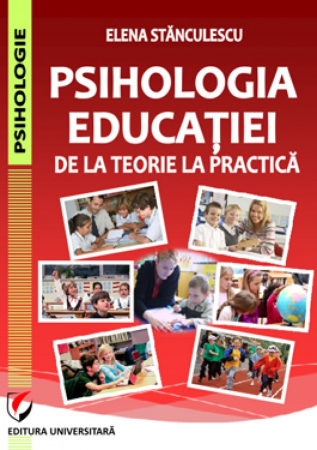
Educational Psychology. From theory to practice
Fundamentals of psychology - Mihai Anitei

Romanian psychologists of the 20th century - Pavel Muresan, Ion Manzat