📦 FREE SHIPPING OVER 120 RON
Order Tracking Individuals / Sales: 0745 200 357 / Orders Legal Entities: 0721 722 783
Manuscript proposals: [email protected] : 0745 204 115

 EN
EN  Romana
6359.png "Editura Universitară") Parenting competence. Models of conceptualization and diagnosis. Family group dynamics
Parenting competence. Models of conceptualization and diagnosis. Family group dynamics
![Parenting competence. Models of conceptualization and diagnosis. Family group dynamics [0]](https://gomagcdn.ro/domains/editurauniversitara.ro/files/product/medium/competenta-parentala-modele-de-conceptualizare-si-diagnoza-dinamica-grupului-familial-980753.jpg "Parenting competence. Models of conceptualization and diagnosis. Family group dynamics [0]")
![Parenting competence. Models of conceptualization and diagnosis. Family group dynamics [1]](https://gomagcdn.ro/domains/editurauniversitara.ro/files/product/medium/competenta-parentala-modele-de-conceptualizare-si-diagnoza-dinamica-grupului-familial-765571.jpg "Parenting competence. Models of conceptualization and diagnosis. Family group dynamics [1]")
![Parenting competence. Models of conceptualization and diagnosis. Family group dynamics [1]](https://gomagcdn.ro/domains/editurauniversitara.ro/files/product/original/competenta-parentala-modele-de-conceptualizare-si-diagnoza-dinamica-grupului-familial-980753.jpg "Parenting competence. Models of conceptualization and diagnosis. Family group dynamics [1]")
![Parenting competence. Models of conceptualization and diagnosis. Family group dynamics [2]](https://gomagcdn.ro/domains/editurauniversitara.ro/files/product/original/competenta-parentala-modele-de-conceptualizare-si-diagnoza-dinamica-grupului-familial-765571.jpg "Parenting competence. Models of conceptualization and diagnosis. Family group dynamics [2]")
Publisher: Editura Universitară
Author: Simona Maria Glăveanu
Edition: second
Pages: 428
Publisher year: 2025
ISBN: 978-606-28-1972-9
DOI: https://doi.org/10.5682/9786062819729
Product Code:
9786062819729
Do you need help?
0745 200 357
- Authors
- Content
- More details
- Reviews (0)
Preface – 2nd edition /13
Preface – 1st edition /19
Foreword – 2nd edition /23
Foreword – 1st edition /29
PART ONE
THE PROBLEM AREA OF PARENTAL COMPETENCE: SCIENTIFIC PREMISES, CONCEPTUALIZATION MODELS AND DIAGNOSIS
Chapter I
PARENTAL MODELS /33
1. The “authoritarian” parenting model/35
2. The “indulgent” parenting model/41
3. The “protective/overprotective” parenting model/47
4. The “inconsistent” parenting model/51
5. The “indifferent” parenting model/54
6. The “aggressive” parenting model/58
7. The “efficient” parenting model/60
Chapter II
THE FAMILY ENVIRONMENT IN ASSISTANCE IN THE FORMATION AND DEVELOPMENT OF THE CHILD /68
1. The role of the family in the formation of personality /68
1.1. The affective component /70
1.2. Moral conduct /73
1.3. Social integration /76
1.4. Behavioral deviance /80
2. Parental interrelations and cognitive development /85
3. The child's representations regarding the family environment /89
Chapter III
EXPLICATIVE INTERPRETATIVE APPROACHES OF PARENTAL COMPETENCE /91
1. Factorial model of parental competence /91
2. Psychological connotations of explanatory-interpretative models /95
2.1. Personal model or trait model /95
2.1.1. Parental competence – module of social competences (personality dimensions) /96
2.1.2. Emotional intelligence – resource of parental competences /106
2.1.3. Other individual psychological factors of parents /116
2.1.3.1. Parental cognition /116
2.1.3.2. Stress resistance /117
2.1.3.3. Emotional disorders /118
2.1.3.4. Personality disorders and psychoses /120
2.2. The situational or contingent model /122
2.2.1. Socio-cultural and socio-economic particularities – mediating vectors in parental competence /
2.2.2. The impact of professional career on parental competence /126
2.2.3. Nanny – shaping factor in parental competence /129
2.2.4. Parental competence and family type /130
2.2.4.1. Traditional/modern family /130
2.2.4.2. Parental family /134
2.2.4.3. Single-parent family /138
2.2.4.4. Extended family /142
2.2.4.5. Family of origin /144
2.3. Integrative interactionist model /145
2.3.1. The relationship between the child’s and parents’ traits /146
2.3.2. Typology of the difficult child /151
2.3.3. Relationships between siblings /154
Chapter IV
DIAGNOSTIC MEANS OF PARENTAL COMPETENCE /158
1. Instruments for investigating family interrelationships – connotations for assessing parental competence /158
2. Integrated national strategy for training and development of parental competence /160
3. Contemporary international approaches in the study of parenting / parental competence /164
PART TWO
RESEARCH – PARENTAL COMPETENCE
Chapter V
RESEARCH METHODOLOGY /174
1. Objectives/174
2. Hypotheses /175
3. Subjects/176
4. Methods/176
4.1. Instruments used for examining parents /176
4.1.1. CCP Inventory (S.M. Glăveanu) /176
4.1.2. Evaluation grid of teachers’ perception of the dynamics of parental competence (S.M. Glăveanu)/183
4.1.3. 16 PF Questionnaire (R.B. Cattell) /184
4.1.4. GZ Questionnaire (J. Guilford – W. Zimmerman) /192
4.1.5. EQ Test (T. Carabin)/195
4.1.6. EMBU Inventory (C. Perris et al.) /197
4.1.7. COPE Questionnaire (C.S. Carver et al.) /200
4.1.8. MRQ Questionnaire (W.E. Snell et al.) /204
4.2. Instruments used for examining children /209
4.2.1. WM Questionnaire (R.S. Woodworth – E. Mathews) /209
4.2. Grid for observing and evaluating the child’s behavior at school and investigating family events from the perspective of teachers (S.M. Glăveanu) /214
Chapter VI
DATA PRESENTATION, ANALYSIS AND INTERPRETATION /216
1. Preliminary data analysis/216
2. Factor model of parental competence /218
3. Variation of parental competence according to socio-demographic characteristics/229
4. A set of personality traits as predictors of parental competence/250
5. A series of psychosocial variables of parents in correlation with the dimensions of parental competence /271
5.1. Emotional intelligence /271
5.2. The way of perceiving the experience of the educational model lived in the family of origin /274
5.3. Coping style /277
5.4. Peculiarities of the couple relationship /281
6. School and social adaptation of children in alternatives that correlate with the attributes of parental competence /284
Chapter VII
CONCLUSIONS /291
PART THREE
FAMILY GROUP DYNAMICS IN SPECIFIC CONDITIONS – PARENTAL COMPETENCE OF VULNERABLE GROUPS
Chapter VIII
VULNERABLE GROUPS IN CONTEMPORARY SOCIETY /302
1. Conceptual approaches /302
2. Typologies and characteristics of families in the category of vulnerable groups /305
2.1. Single-parent families /305
2.1.1. Characteristics of single-parent families headed by mothers/306
2.1.2. Characteristics of single-parent families headed by fathers/309
2.1.3. Effects of single-parent families on child development/311
2.2. Families affected by domestic violence/314
2.3. Families affected by a precarious financial situation / 320
2.4. Roma families/323
2.5. Rural families/327
2.6. Large families/330
3. Studies on vulnerable groups and intervention approaches tested at national and international level/331
PART FOUR
RESEARCH – PARENTAL COMPETENCE OF VULNERABLE GROUPS
Chapter IX
RESEARCH METHODOLOGY /338
1. Objectives /338
2. Hypotheses/338
3. Subjects /339
4. Methods /342
4.1. Parental competence investigation questionnaire – CCP adapted to vulnerable groups (Glăveanu, 2015) /342
Chapter X.
DATA PRESENTATION AND INTERPRETATION /347
1. Preliminary data analysis/347
2. Adaptation of the parental competence investigation questionnaire (CCP) for vulnerable groups/349
3. Socio-demographic, socio-cultural and economic characteristics; Parental competence and its predictive factors/355
4. Domestic violence – mediating factor in parental competence/363
5. Residential environment – vector of the dynamics of parental competence/367
Chapter XI.
CONCLUSIONS AND RECOMMENDATIONS /373
BIBLIOGRAPHY /384
ANNEXES /407
Annex 1 – Questionnaire for investigating parental attitudes (S.M. Glăveanu) /407
Annex 2 – Grid for identifying children with school and family difficulties, intended for teachers (S.M. Glăveanu) /410
Annex 3 – CCP Inventory (S.M. Glăveanu) /411
Annex 4 – Grid for evaluating teachers’ perception of parental competence dynamics
(S.M. Glăveanu) /420
Annex 5 – Grid for observing and evaluating children’s behavior at school and investigating family events (from the teachers’ perspective) (S.M. Glăveanu) /422
Annex 6. Preliminary data analysis: Statistical indicators of competence Parenting skills of vulnerable groups /424
Annex 7. Preliminary data analysis: Residual values of parental competence in relation to socio-demographic, socio-cultural and economic characteristics of parents from vulnerable groups /427
Preface – 1st edition /19
Foreword – 2nd edition /23
Foreword – 1st edition /29
PART ONE
THE PROBLEM AREA OF PARENTAL COMPETENCE: SCIENTIFIC PREMISES, CONCEPTUALIZATION MODELS AND DIAGNOSIS
Chapter I
PARENTAL MODELS /33
1. The “authoritarian” parenting model/35
2. The “indulgent” parenting model/41
3. The “protective/overprotective” parenting model/47
4. The “inconsistent” parenting model/51
5. The “indifferent” parenting model/54
6. The “aggressive” parenting model/58
7. The “efficient” parenting model/60
Chapter II
THE FAMILY ENVIRONMENT IN ASSISTANCE IN THE FORMATION AND DEVELOPMENT OF THE CHILD /68
1. The role of the family in the formation of personality /68
1.1. The affective component /70
1.2. Moral conduct /73
1.3. Social integration /76
1.4. Behavioral deviance /80
2. Parental interrelations and cognitive development /85
3. The child's representations regarding the family environment /89
Chapter III
EXPLICATIVE INTERPRETATIVE APPROACHES OF PARENTAL COMPETENCE /91
1. Factorial model of parental competence /91
2. Psychological connotations of explanatory-interpretative models /95
2.1. Personal model or trait model /95
2.1.1. Parental competence – module of social competences (personality dimensions) /96
2.1.2. Emotional intelligence – resource of parental competences /106
2.1.3. Other individual psychological factors of parents /116
2.1.3.1. Parental cognition /116
2.1.3.2. Stress resistance /117
2.1.3.3. Emotional disorders /118
2.1.3.4. Personality disorders and psychoses /120
2.2. The situational or contingent model /122
2.2.1. Socio-cultural and socio-economic particularities – mediating vectors in parental competence /
2.2.2. The impact of professional career on parental competence /126
2.2.3. Nanny – shaping factor in parental competence /129
2.2.4. Parental competence and family type /130
2.2.4.1. Traditional/modern family /130
2.2.4.2. Parental family /134
2.2.4.3. Single-parent family /138
2.2.4.4. Extended family /142
2.2.4.5. Family of origin /144
2.3. Integrative interactionist model /145
2.3.1. The relationship between the child’s and parents’ traits /146
2.3.2. Typology of the difficult child /151
2.3.3. Relationships between siblings /154
Chapter IV
DIAGNOSTIC MEANS OF PARENTAL COMPETENCE /158
1. Instruments for investigating family interrelationships – connotations for assessing parental competence /158
2. Integrated national strategy for training and development of parental competence /160
3. Contemporary international approaches in the study of parenting / parental competence /164
PART TWO
RESEARCH – PARENTAL COMPETENCE
Chapter V
RESEARCH METHODOLOGY /174
1. Objectives/174
2. Hypotheses /175
3. Subjects/176
4. Methods/176
4.1. Instruments used for examining parents /176
4.1.1. CCP Inventory (S.M. Glăveanu) /176
4.1.2. Evaluation grid of teachers’ perception of the dynamics of parental competence (S.M. Glăveanu)/183
4.1.3. 16 PF Questionnaire (R.B. Cattell) /184
4.1.4. GZ Questionnaire (J. Guilford – W. Zimmerman) /192
4.1.5. EQ Test (T. Carabin)/195
4.1.6. EMBU Inventory (C. Perris et al.) /197
4.1.7. COPE Questionnaire (C.S. Carver et al.) /200
4.1.8. MRQ Questionnaire (W.E. Snell et al.) /204
4.2. Instruments used for examining children /209
4.2.1. WM Questionnaire (R.S. Woodworth – E. Mathews) /209
4.2. Grid for observing and evaluating the child’s behavior at school and investigating family events from the perspective of teachers (S.M. Glăveanu) /214
Chapter VI
DATA PRESENTATION, ANALYSIS AND INTERPRETATION /216
1. Preliminary data analysis/216
2. Factor model of parental competence /218
3. Variation of parental competence according to socio-demographic characteristics/229
4. A set of personality traits as predictors of parental competence/250
5. A series of psychosocial variables of parents in correlation with the dimensions of parental competence /271
5.1. Emotional intelligence /271
5.2. The way of perceiving the experience of the educational model lived in the family of origin /274
5.3. Coping style /277
5.4. Peculiarities of the couple relationship /281
6. School and social adaptation of children in alternatives that correlate with the attributes of parental competence /284
Chapter VII
CONCLUSIONS /291
PART THREE
FAMILY GROUP DYNAMICS IN SPECIFIC CONDITIONS – PARENTAL COMPETENCE OF VULNERABLE GROUPS
Chapter VIII
VULNERABLE GROUPS IN CONTEMPORARY SOCIETY /302
1. Conceptual approaches /302
2. Typologies and characteristics of families in the category of vulnerable groups /305
2.1. Single-parent families /305
2.1.1. Characteristics of single-parent families headed by mothers/306
2.1.2. Characteristics of single-parent families headed by fathers/309
2.1.3. Effects of single-parent families on child development/311
2.2. Families affected by domestic violence/314
2.3. Families affected by a precarious financial situation / 320
2.4. Roma families/323
2.5. Rural families/327
2.6. Large families/330
3. Studies on vulnerable groups and intervention approaches tested at national and international level/331
PART FOUR
RESEARCH – PARENTAL COMPETENCE OF VULNERABLE GROUPS
Chapter IX
RESEARCH METHODOLOGY /338
1. Objectives /338
2. Hypotheses/338
3. Subjects /339
4. Methods /342
4.1. Parental competence investigation questionnaire – CCP adapted to vulnerable groups (Glăveanu, 2015) /342
Chapter X.
DATA PRESENTATION AND INTERPRETATION /347
1. Preliminary data analysis/347
2. Adaptation of the parental competence investigation questionnaire (CCP) for vulnerable groups/349
3. Socio-demographic, socio-cultural and economic characteristics; Parental competence and its predictive factors/355
4. Domestic violence – mediating factor in parental competence/363
5. Residential environment – vector of the dynamics of parental competence/367
Chapter XI.
CONCLUSIONS AND RECOMMENDATIONS /373
BIBLIOGRAPHY /384
ANNEXES /407
Annex 1 – Questionnaire for investigating parental attitudes (S.M. Glăveanu) /407
Annex 2 – Grid for identifying children with school and family difficulties, intended for teachers (S.M. Glăveanu) /410
Annex 3 – CCP Inventory (S.M. Glăveanu) /411
Annex 4 – Grid for evaluating teachers’ perception of parental competence dynamics
(S.M. Glăveanu) /420
Annex 5 – Grid for observing and evaluating children’s behavior at school and investigating family events (from the teachers’ perspective) (S.M. Glăveanu) /422
Annex 6. Preliminary data analysis: Statistical indicators of competence Parenting skills of vulnerable groups /424
Annex 7. Preliminary data analysis: Residual values of parental competence in relation to socio-demographic, socio-cultural and economic characteristics of parents from vulnerable groups /427
The relationship between parents and children is constantly addressed by researchers from the most varied fields, some of which are interdependent or mutually influence each other – such as psychology, educational sciences, sociology, special psychopedagogy, etc. Parenting practices understood as specific behaviors through which parents fulfill their responsibilities, have the greatest immediate impact on children's mental health. From a developmental perspective, inadequate parenting is a risk factor in the occurrence of neurodevelopmental disorders. The importance of parental practices is reflected in the growing number of parenting programs aimed at ensuring harmonious development of children (Florean et al., 2020). Consequently, a consistent literature is available on the respective issue, with numerous works referring to various aspects subsumed under it.
The second edition of the book "Parental competence. Models of conceptualization and diagnosis. Family group dynamics" represents a relevant editorial publication that multidimensionally approaches a construct with critical implications for the harmonious development of children. The book substantiates, by using data obtained in practice, the evaluation of the construct of "parental competence" through approaches and diagnostic tools that innovatively approach the multiple dimensions that shape it.
The volume aimed at the theoretical, methodological and applicative levels and includes four parts: two theoretical (in which models and concepts about the dynamics of family relationships are presented) and two applicative (which address parental competence at a general level - an aspect also treated in the first edition and, respectively, at the level of vulnerable groups of parents - an aspect added in the second edition).
The first part of the book is dedicated to the analysis of the specialized literature on family interrelationships.
In the first chapter, the author analyzed, in an integrative form, the existing scientific concepts, her perspective going beyond the reporting only to the educational style (and, implicitly, to the evaluation of the relationship between parents and children only on the authority-affective axis). She also proposed and defined a new term – that of “parental model”, elaborating six such models that describe dysfunctions of the parental psychobehavioral picture (the authoritarian, indulgent, overprotective, negligent, inconsistent and aggressive parent model) and one that reflects the conduct and effective relationship with the child (the competent parent model). Through this vision of the “models”, parenting is paradigmatically approached as a process of promoting and supporting intellectual, emotional and social development with a high complexity and which is not strictly reduced to a biological relationship.
The second chapter refers to theories about the role of the family in building personality, attachment and moral conduct, as well as in the social insertion and cognitive development of the child, being intended to integrate information in the development of the structural model of parental competence.
The third chapter defines the concept of "parental competence", approached from the perspective of three explanatory interpretative models: personal, situational and interactionist. In the personal model, parental competence was associated and reported to characteristics of the parent such as personality traits, level of social competence and emotional intelligence, stress resistance, conflict management capacity, emotional/personality disorders, psychoses, etc.
The situational model explains the variation in parental competence depending on mediating vectors such as socio-cultural and socio-economic particularities, family type, the impact of professional career on the parent-child relationship, the situation of the child raised by a nanny, and the interactionist model captures the effect of the encounter between the characteristics of the child, the parents and those of the context in determining the dynamics of parental competence.
The fourth chapter, entitled Means of diagnosing parental competence, deals with the issue of instruments for investigating family relationships and analyzes the National Integrated Strategy for Training and Development of Parental Competence and contemporary international approaches in the study of parenting.
The second part of the book and its three chapters reflect the way the author conducted the actual research: the fifth chapter describes the research methodology, the sixth presents and interprets the data, and the seventh chapter expresses the conclusions and extrapolations.
The value of the book does not only consist in the structuring of established scientific concepts and the theoretical conceptualization of some notions, but also in the research design. In this part of the work, the author responds to some needs of Romanian society by building and validating instruments such as the Parental Competence Diagnostic Questionnaire, the Observation and Evaluation Grids of its Dynamics and the Observation and Evaluation Grids of the Child's Behavior at School (from the Teachers' Perspective) - which, through scales and content, represent a novelty in the field.
The author reaches a high level of analysis and offers a holistic and complex perspective on parental competence by developing a structural model of parental competence based on the personological side, but also on certain psychosocial aspects such as coping style, emotional intelligence, particularities of the marital relationship and the perception of the experience of the educational model lived in the family of origin. Finally, the relationship between parental competence and children's behavior patterns is described in order to identify the directions of its evolution.
In the third part, the author analyzes the family characteristics of vulnerable groups. In the specialized literature, there are numerous studies on the various characteristics of vulnerable groups and on their specific socio-economic characteristics. The emergence and existence of vulnerable groups seem to have determinants mainly of an economic nature, but the respective groups are defined, as a whole, in relation to a wide variety of indicators, from those of living standards, access to the labor market, education, housing, health status, type of household (single-parent and/or large family) or community (Roma family), social participation, to indicators that delimit social problems – such as institutionalization, exploitation, trafficking, domestic violence or drug use. As a result, the multilateral dimension implied by the definition of the respective groups is evident, which requires the consideration of several disciplines from the areas of psychosocial, economic sciences, etc.
Starting from the analysis of various types of families in vulnerable groups and from the National Strategy for Supporting Parents 2024 – 2030, developed by the Ministry of Education, Health and Family, Youth and Equal Opportunities, the author innovatively approaches vulnerable groups by introducing as a variable in their analysis the concept of "parental competence" as an essential factor in the formation of a harmonious personality of children and, implicitly, in preparing the next generation for social integration. In the fourth part, the author describes the "parental competence of vulnerable groups" according to certain socio-demographic (gender, age, level of education, number of children, etc.), socio-cultural (type of family, presence of domestic violence, ethnicity, etc.) and economic (financial situation) particularities.
The results obtained by the author in her research on various groups can constitute benchmarks for the development of strategies and programs for the development of parental competence, specifically dedicated to the particularities of these groups.
In addition to specialists, this book can also make relevant contributions to parents who are learning to become parents or to consolidate their parenting practices, to optimize the self-regulation they need to monitor and adapt their own attributions and behaviors and to be independent in solving problems. Sanders and Turner (2018) define 5 key elements in this regard: self-sufficiency, self-efficacy, self-management, personal commitment and problem solving.
We recommend this book as a reference scientific achievement for specialists in the fields of educational psychology, school and family counseling, who, by reading it, can gain relevant information, as well as tools for investigating the parent-child relationship, useful in the diagnostic and evaluation of intervention.
The second edition of the book "Parental competence. Models of conceptualization and diagnosis. Family group dynamics" represents a relevant editorial publication that multidimensionally approaches a construct with critical implications for the harmonious development of children. The book substantiates, by using data obtained in practice, the evaluation of the construct of "parental competence" through approaches and diagnostic tools that innovatively approach the multiple dimensions that shape it.
The volume aimed at the theoretical, methodological and applicative levels and includes four parts: two theoretical (in which models and concepts about the dynamics of family relationships are presented) and two applicative (which address parental competence at a general level - an aspect also treated in the first edition and, respectively, at the level of vulnerable groups of parents - an aspect added in the second edition).
The first part of the book is dedicated to the analysis of the specialized literature on family interrelationships.
In the first chapter, the author analyzed, in an integrative form, the existing scientific concepts, her perspective going beyond the reporting only to the educational style (and, implicitly, to the evaluation of the relationship between parents and children only on the authority-affective axis). She also proposed and defined a new term – that of “parental model”, elaborating six such models that describe dysfunctions of the parental psychobehavioral picture (the authoritarian, indulgent, overprotective, negligent, inconsistent and aggressive parent model) and one that reflects the conduct and effective relationship with the child (the competent parent model). Through this vision of the “models”, parenting is paradigmatically approached as a process of promoting and supporting intellectual, emotional and social development with a high complexity and which is not strictly reduced to a biological relationship.
The second chapter refers to theories about the role of the family in building personality, attachment and moral conduct, as well as in the social insertion and cognitive development of the child, being intended to integrate information in the development of the structural model of parental competence.
The third chapter defines the concept of "parental competence", approached from the perspective of three explanatory interpretative models: personal, situational and interactionist. In the personal model, parental competence was associated and reported to characteristics of the parent such as personality traits, level of social competence and emotional intelligence, stress resistance, conflict management capacity, emotional/personality disorders, psychoses, etc.
The situational model explains the variation in parental competence depending on mediating vectors such as socio-cultural and socio-economic particularities, family type, the impact of professional career on the parent-child relationship, the situation of the child raised by a nanny, and the interactionist model captures the effect of the encounter between the characteristics of the child, the parents and those of the context in determining the dynamics of parental competence.
The fourth chapter, entitled Means of diagnosing parental competence, deals with the issue of instruments for investigating family relationships and analyzes the National Integrated Strategy for Training and Development of Parental Competence and contemporary international approaches in the study of parenting.
The second part of the book and its three chapters reflect the way the author conducted the actual research: the fifth chapter describes the research methodology, the sixth presents and interprets the data, and the seventh chapter expresses the conclusions and extrapolations.
The value of the book does not only consist in the structuring of established scientific concepts and the theoretical conceptualization of some notions, but also in the research design. In this part of the work, the author responds to some needs of Romanian society by building and validating instruments such as the Parental Competence Diagnostic Questionnaire, the Observation and Evaluation Grids of its Dynamics and the Observation and Evaluation Grids of the Child's Behavior at School (from the Teachers' Perspective) - which, through scales and content, represent a novelty in the field.
The author reaches a high level of analysis and offers a holistic and complex perspective on parental competence by developing a structural model of parental competence based on the personological side, but also on certain psychosocial aspects such as coping style, emotional intelligence, particularities of the marital relationship and the perception of the experience of the educational model lived in the family of origin. Finally, the relationship between parental competence and children's behavior patterns is described in order to identify the directions of its evolution.
In the third part, the author analyzes the family characteristics of vulnerable groups. In the specialized literature, there are numerous studies on the various characteristics of vulnerable groups and on their specific socio-economic characteristics. The emergence and existence of vulnerable groups seem to have determinants mainly of an economic nature, but the respective groups are defined, as a whole, in relation to a wide variety of indicators, from those of living standards, access to the labor market, education, housing, health status, type of household (single-parent and/or large family) or community (Roma family), social participation, to indicators that delimit social problems – such as institutionalization, exploitation, trafficking, domestic violence or drug use. As a result, the multilateral dimension implied by the definition of the respective groups is evident, which requires the consideration of several disciplines from the areas of psychosocial, economic sciences, etc.
Starting from the analysis of various types of families in vulnerable groups and from the National Strategy for Supporting Parents 2024 – 2030, developed by the Ministry of Education, Health and Family, Youth and Equal Opportunities, the author innovatively approaches vulnerable groups by introducing as a variable in their analysis the concept of "parental competence" as an essential factor in the formation of a harmonious personality of children and, implicitly, in preparing the next generation for social integration. In the fourth part, the author describes the "parental competence of vulnerable groups" according to certain socio-demographic (gender, age, level of education, number of children, etc.), socio-cultural (type of family, presence of domestic violence, ethnicity, etc.) and economic (financial situation) particularities.
The results obtained by the author in her research on various groups can constitute benchmarks for the development of strategies and programs for the development of parental competence, specifically dedicated to the particularities of these groups.
In addition to specialists, this book can also make relevant contributions to parents who are learning to become parents or to consolidate their parenting practices, to optimize the self-regulation they need to monitor and adapt their own attributions and behaviors and to be independent in solving problems. Sanders and Turner (2018) define 5 key elements in this regard: self-sufficiency, self-efficacy, self-management, personal commitment and problem solving.
We recommend this book as a reference scientific achievement for specialists in the fields of educational psychology, school and family counseling, who, by reading it, can gain relevant information, as well as tools for investigating the parent-child relationship, useful in the diagnostic and evaluation of intervention.
Prof. univ. dr. Adrian Roșan,
Director of the Department of Special Psychopedagogy
Faculty of Psychology and Educational Sciences,
Babeș Bolyai University, Cluj Napoca
Director of the Department of Special Psychopedagogy
Faculty of Psychology and Educational Sciences,
Babeș Bolyai University, Cluj Napoca
If you want to express your opinion about this product you can add a review.
write a review
Similar products


Bullies. How to deal with bullying. Help yourself! - Trevor Romain

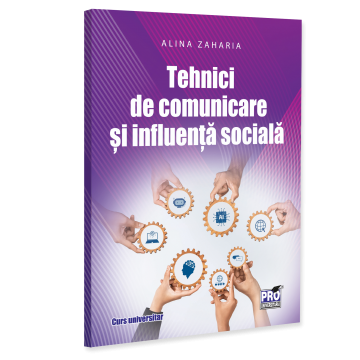
Communication techniques and social influence - Alina Zaharia





Mindshift, invata sa inveti altfel - Barbara Oakley