📦 FREE SHIPPING OVER 120 RON
Order Tracking Individuals / Sales: 0745 200 357 / Orders Legal Entities: 0721 722 783
Manuscript proposals: [email protected] : 0745 204 115

 EN
EN  Romana
6359.png "Editura Universitară") The monetary history of the Campulung-Muscel microregion. The Middle Ages and the Modern Period
The monetary history of the Campulung-Muscel microregion. The Middle Ages and the Modern Period
![The monetary history of the Campulung-Muscel microregion. The Middle Ages and the Modern Period [1]](https://gomagcdn.ro/domains/editurauniversitara.ro/files/product/original/istoria-monetara-a-microregiunii-campulung-muscel-evul-mediu-si-perioada-moderna-879290.jpg "The monetary history of the Campulung-Muscel microregion. The Middle Ages and the Modern Period [1]")
Publisher: Editura Universitară
Author: Paul Gabriel Dumitrache
Edition: I
Pages: 306
Publisher year: 2022
ISBN: 978-606-28-1542-4
DOI: https://doi.org/10.5682/9786062815424
Product Code:
9786062815424
Do you need help?
0745 200 357
- Authors
- More details
- Content
- Reviews (0)
The work "The Monetary History of the Câmpulung Muscel Microregion. The Middle Ages and the Modern Period", elaborated by Mr. Paul Gabriel Dumitrache, represents a complex, unique radiography of a process that lasted more than five centuries, from the genesis of the monetization of commercial transactions, in the space of the Câmpulung Muscel Depression and until the decantation of modern relations of the exchange economy from the days of the adoption of the National Monetary System of the United Romanian Principalities.
The Câmpulung Muscel microregion, whose spatial limits are determined by the geographical ones of the depression of the same name, has represented since the dawn of the genesis of the feudal state of Wallachia, a crucible of the effervescence of the economic, cultural, social and even spiritual relations of the local communities that evolved and contributed to the birth of the urbanization nucleus of Câmpulung, one of the first urban centers and capital of Wallachia.
The author reviews the evolutionary and structural changes in the monetary circulation in this area, changes analyzed in a critical comparative perspective, in close connection with previous studies and publications. Thus, in the first instance, the known monetary discoveries are synthetically presented, both those resulting from chance discoveries and those resulting from archaeological campaigns carried out at sites in the region. The centralization of isolated discoveries resulted in the compilation of an exhaustive repertoire of isolated monetary discoveries, in an archaeological or chance context, and the extensive analysis of a sample of these discoveries allowed the author to highlight a series of particularities of the local monetary circulation, relating to the main categories and typologies in the structure of the monetary mass: Ottoman, Hungarian, Polish, Austrian currency, etc.
Pursuing the objective of capturing, from an analytical point of view, all the numismatic sources discovered in the region, the author also listed all the monetary treasures discovered, treasures dated from the 14th to the 19th centuries. Among these, the unpublished treasure consisting of two thousand zwanzigers of the Habsburg Monarchy or originating from German states, cities or ecclesiastical authorities stands out as a weight. If, from a quantitative point of view, that of the volume represented by the numismatic material studied, the figures represent the most objective indicator: over two thousand five hundred coins originating from the numismatic collections of the Câmpulung Municipal Museum, the National Museum of History of Romania, the National Museum "Curtea Domnească din Târgoviște" or private collections, from a qualitative point of view the methodological approach of the study played a decisive role in drawing its final touch in the field of numismatic research.
The present work represents the result of research undertaken within the framework of doctoral studies based on extensive documentation, supported both by consulting a significant number of bibliographic sources and by the collection, processing and analysis of statistical information, supplemented by detailed investigations of unpublished numismatic material, carried out by the author.
The extensive dimensions of the chronological interval and the issues of monetary systems of wide diversity addressed within this study, determined a hierarchical analysis, starting from the general to the particular and vice versa, from simple to complex, and for a better assessment of the issues, certain trends and developments were analyzed both in a local and regional context.
The complex nature of the topic addressed required the use of differentiated methods, in order to analyze the most accurate, but at the same time the most substantiated, evolutionary processes of monetary circulation in the Câmpulung Muscel microregion. Starting from the fascinating universe of Ottoman studies, the author explored through the prism of the analyzed numismatic material, both the specific issues of coins coming from the Central and Eastern European, Polish, Hungarian or Austrian space, as well as specific areas such as those of monetary issues specific to the Romanian Wallachia, the Golden Horde or the Balkan space. Last but not least, the methodological complexity of the work also results from the approach to aspects related to counterfeits and forgeries that circulated in the region, those related to coins countermarked in local discoveries or even that of exonumia, namely the calculation tokens and their placement in a local historical context.
Addressing primarily the scientific community, the work represents a reference base in continuing numismatic research studies based on new monetary discoveries in the analyzed region, but also a landmark in the replication of similar studies developed in the contact area of Transylvania with Wallachia, or even of synthesis works specific in terms of the field or broad in terms of the reference space.
It is a valuable work for the history of the region, elaborated with great enthusiasm, after a meticulous documentation and analysis, dedicated to both specialists and the public interested in the history of the city of Câmpulung and its surroundings or coin collectors. Remarkable for his passion for the history of Câmpulung, symbiotic with that dedicated to the study of numismatics, the author joins exceptional personalities, such as the priest Ioan Răuțescu, historian and folklorist, whose historical monographs were awarded three times by the Romanian Academy (in 1937, 1939 and 1943).
The Câmpulung Muscel microregion, whose spatial limits are determined by the geographical ones of the depression of the same name, has represented since the dawn of the genesis of the feudal state of Wallachia, a crucible of the effervescence of the economic, cultural, social and even spiritual relations of the local communities that evolved and contributed to the birth of the urbanization nucleus of Câmpulung, one of the first urban centers and capital of Wallachia.
The author reviews the evolutionary and structural changes in the monetary circulation in this area, changes analyzed in a critical comparative perspective, in close connection with previous studies and publications. Thus, in the first instance, the known monetary discoveries are synthetically presented, both those resulting from chance discoveries and those resulting from archaeological campaigns carried out at sites in the region. The centralization of isolated discoveries resulted in the compilation of an exhaustive repertoire of isolated monetary discoveries, in an archaeological or chance context, and the extensive analysis of a sample of these discoveries allowed the author to highlight a series of particularities of the local monetary circulation, relating to the main categories and typologies in the structure of the monetary mass: Ottoman, Hungarian, Polish, Austrian currency, etc.
Pursuing the objective of capturing, from an analytical point of view, all the numismatic sources discovered in the region, the author also listed all the monetary treasures discovered, treasures dated from the 14th to the 19th centuries. Among these, the unpublished treasure consisting of two thousand zwanzigers of the Habsburg Monarchy or originating from German states, cities or ecclesiastical authorities stands out as a weight. If, from a quantitative point of view, that of the volume represented by the numismatic material studied, the figures represent the most objective indicator: over two thousand five hundred coins originating from the numismatic collections of the Câmpulung Municipal Museum, the National Museum of History of Romania, the National Museum "Curtea Domnească din Târgoviște" or private collections, from a qualitative point of view the methodological approach of the study played a decisive role in drawing its final touch in the field of numismatic research.
The present work represents the result of research undertaken within the framework of doctoral studies based on extensive documentation, supported both by consulting a significant number of bibliographic sources and by the collection, processing and analysis of statistical information, supplemented by detailed investigations of unpublished numismatic material, carried out by the author.
The extensive dimensions of the chronological interval and the issues of monetary systems of wide diversity addressed within this study, determined a hierarchical analysis, starting from the general to the particular and vice versa, from simple to complex, and for a better assessment of the issues, certain trends and developments were analyzed both in a local and regional context.
The complex nature of the topic addressed required the use of differentiated methods, in order to analyze the most accurate, but at the same time the most substantiated, evolutionary processes of monetary circulation in the Câmpulung Muscel microregion. Starting from the fascinating universe of Ottoman studies, the author explored through the prism of the analyzed numismatic material, both the specific issues of coins coming from the Central and Eastern European, Polish, Hungarian or Austrian space, as well as specific areas such as those of monetary issues specific to the Romanian Wallachia, the Golden Horde or the Balkan space. Last but not least, the methodological complexity of the work also results from the approach to aspects related to counterfeits and forgeries that circulated in the region, those related to coins countermarked in local discoveries or even that of exonumia, namely the calculation tokens and their placement in a local historical context.
Addressing primarily the scientific community, the work represents a reference base in continuing numismatic research studies based on new monetary discoveries in the analyzed region, but also a landmark in the replication of similar studies developed in the contact area of Transylvania with Wallachia, or even of synthesis works specific in terms of the field or broad in terms of the reference space.
It is a valuable work for the history of the region, elaborated with great enthusiasm, after a meticulous documentation and analysis, dedicated to both specialists and the public interested in the history of the city of Câmpulung and its surroundings or coin collectors. Remarkable for his passion for the history of Câmpulung, symbiotic with that dedicated to the study of numismatics, the author joins exceptional personalities, such as the priest Ioan Răuțescu, historian and folklorist, whose historical monographs were awarded three times by the Romanian Academy (in 1937, 1939 and 1943).
scientific researcher Eugen Nicolae
FOREWORD/9
INTRODUCTION/11
I. HISTORY OF THE RESEARCH/15
I.1. Historiography/15
I.2. Numismatic sources known from bibliographical sources/16
II. TRADE, STORES AND SOCIETY IN CÂMPULUNG/19
II.1. At the intersection of trade routes/19
II.2. The Saxons of Câmpulung and the links with Transylvania/20
II.3. The princely court, customs and commercial privileges/21
II.4. The Fair of Saint Elijah/25
II.5. The transit of Turkish goods to Brașov/30
II.6. Trade with Central and Western Europe/32
III. ISOLATED MONETARY DISCOVERIES/34
III.1. Spatial distribution of discoveries/34
Architectural complex Royal Court "Negru Vodă" Monastery/36
Architectural complex Bărăția Catholic Church of St. Iacob/40
Valea (extinct) and St. Marina Churches/42
St. Gheorghe Church ("Olari")/45
Fundeni Church ("Assumption of the Virgin Mary")/46
Bradu and St. Ilie Churches/47
Schei Church /48
Complex of monuments from Cetățeni/49
Boyar's court from Suslănești, "Hobaia" point/55
Oratia Fortress (Podu Dâmboviței)/56
Lerești, "La ziduri" point and other discoveries/57
Boy's court of Vladești, Aninoasa, Cotești and Capu Piscului/60
Complex of monuments from Domnești, "Siliște" point /61
Chancellous Discoveries in Public or Private Collections/62
Synthesis of Isolated Monetary Discoveries/65
III.2. Extensive analysis of a sample from isolated finds/66
The dinar, the everyday coin /69
Ottoman coin /73
Polish coin /78
Austrian coin /82
A coin from the Tatar khan Berdi Beg /84
Mountain ducats and Bulgarian or Ragusan grosz /85
IV. COIN TREASURES /91
IV.1. Determination of the unique hoard of two thousand zwanzigers/93
The Habsburg Monarchy/95
German states, cities and ecclesiastical authorities /106
IV.2. Analysis of monetary circulation in light of discovered hoards /110
Hoard of Wallachia and Bulgarian coins, 14th century /111
Hoard from Podu Dâmboviței/113
Hoard from Vulturești/113
Hoard from Dragoslavele/116
Hoard from Câmpulung, Schei neighborhood/121
Hoard from Câmpulung, Crețișoara hill /125
Hoard from Câmpulung, Lascăr Catargi street/127
Hoard of Zwanzigeri/133
V. COUNTERMARKED ISSUES, FALSE COUNTERS AND CALCULATION TOKENS/139
A counter-marked Ragusan grosz/139
On the forgeries at the Câmpulung Fair/141
Nürnberg tokens in the accounting of the Câmpulung Monastery/143
CONCLUSIONS/146
Abbreviations/147
Bibliography/148
ANNEXES/161
A. Sample catalogue of isolated coin finds /162
B. Catalogue of the Zwanzigeri hoard /170
B.1 The Habsburg Monarchy /170
B.2 German states, cities and ecclesiastical authorities /202
C. Centralisers of coin finds /211
C.1 Catalogue of isolated coin finds /211
C.2 Catalogue of coin hoards /216
D. Plates /217
E. Maps /225
INTRODUCTION/11
I. HISTORY OF THE RESEARCH/15
I.1. Historiography/15
I.2. Numismatic sources known from bibliographical sources/16
II. TRADE, STORES AND SOCIETY IN CÂMPULUNG/19
II.1. At the intersection of trade routes/19
II.2. The Saxons of Câmpulung and the links with Transylvania/20
II.3. The princely court, customs and commercial privileges/21
II.4. The Fair of Saint Elijah/25
II.5. The transit of Turkish goods to Brașov/30
II.6. Trade with Central and Western Europe/32
III. ISOLATED MONETARY DISCOVERIES/34
III.1. Spatial distribution of discoveries/34
Architectural complex Royal Court "Negru Vodă" Monastery/36
Architectural complex Bărăția Catholic Church of St. Iacob/40
Valea (extinct) and St. Marina Churches/42
St. Gheorghe Church ("Olari")/45
Fundeni Church ("Assumption of the Virgin Mary")/46
Bradu and St. Ilie Churches/47
Schei Church /48
Complex of monuments from Cetățeni/49
Boyar's court from Suslănești, "Hobaia" point/55
Oratia Fortress (Podu Dâmboviței)/56
Lerești, "La ziduri" point and other discoveries/57
Boy's court of Vladești, Aninoasa, Cotești and Capu Piscului/60
Complex of monuments from Domnești, "Siliște" point /61
Chancellous Discoveries in Public or Private Collections/62
Synthesis of Isolated Monetary Discoveries/65
III.2. Extensive analysis of a sample from isolated finds/66
The dinar, the everyday coin /69
Ottoman coin /73
Polish coin /78
Austrian coin /82
A coin from the Tatar khan Berdi Beg /84
Mountain ducats and Bulgarian or Ragusan grosz /85
IV. COIN TREASURES /91
IV.1. Determination of the unique hoard of two thousand zwanzigers/93
The Habsburg Monarchy/95
German states, cities and ecclesiastical authorities /106
IV.2. Analysis of monetary circulation in light of discovered hoards /110
Hoard of Wallachia and Bulgarian coins, 14th century /111
Hoard from Podu Dâmboviței/113
Hoard from Vulturești/113
Hoard from Dragoslavele/116
Hoard from Câmpulung, Schei neighborhood/121
Hoard from Câmpulung, Crețișoara hill /125
Hoard from Câmpulung, Lascăr Catargi street/127
Hoard of Zwanzigeri/133
V. COUNTERMARKED ISSUES, FALSE COUNTERS AND CALCULATION TOKENS/139
A counter-marked Ragusan grosz/139
On the forgeries at the Câmpulung Fair/141
Nürnberg tokens in the accounting of the Câmpulung Monastery/143
CONCLUSIONS/146
Abbreviations/147
Bibliography/148
ANNEXES/161
A. Sample catalogue of isolated coin finds /162
B. Catalogue of the Zwanzigeri hoard /170
B.1 The Habsburg Monarchy /170
B.2 German states, cities and ecclesiastical authorities /202
C. Centralisers of coin finds /211
C.1 Catalogue of isolated coin finds /211
C.2 Catalogue of coin hoards /216
D. Plates /217
E. Maps /225
If you want to express your opinion about this product you can add a review.
write a review
Similar products



The Imperfect Crime. Colonel Antonescu's Investigations - Dan Antonescu
In storms of steel. Second edition - Ernst Junger

Final analysis. The war that wasn't... war - Tudor Pacuraru
The Quest for Power: Europe 1815-1914 - Richard J. Evans
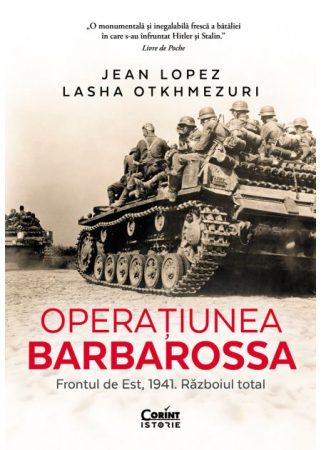
Operation Barbarossa. Eastern Front, 1941. Total War - Jean Lopez Lasha Otkhmezuri
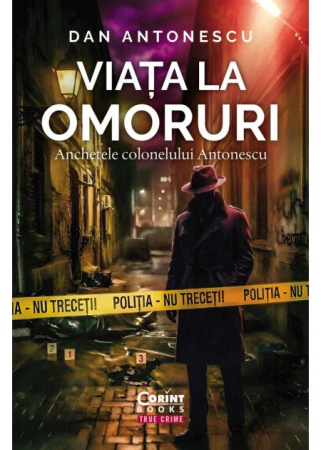
Life at the Murders. Colonel Antonescu's Investigations - Dan Antonescu