📦 FREE SHIPPING OVER 120 RON
Order Tracking Individuals / Sales: 0745 200 357 / Orders Legal Entities: 0721 722 783
Manuscript proposals: [email protected] : 0745 204 115

 EN
EN  Romana
6359.png "Editura Universitară") Sarajevo 1914: the last waltz. A Masonic conspiracy theory
Sarajevo 1914: the last waltz. A Masonic conspiracy theory
![Sarajevo 1914: the last waltz. A Masonic conspiracy theory [0]](https://gomagcdn.ro/domains/editurauniversitara.ro/files/product/medium/sarajevo-1914-ultimul-vals-o-teorie-a-conspiratiei-masonice-331885.jpg "Sarajevo 1914: the last waltz. A Masonic conspiracy theory [0]")
![Sarajevo 1914: the last waltz. A Masonic conspiracy theory [1]](https://gomagcdn.ro/domains/editurauniversitara.ro/files/product/medium/sarajevo-1914-ultimul-vals-o-teorie-a-conspiratiei-masonice-422913.jpg "Sarajevo 1914: the last waltz. A Masonic conspiracy theory [1]")
![Sarajevo 1914: the last waltz. A Masonic conspiracy theory [2]](https://gomagcdn.ro/domains/editurauniversitara.ro/files/product/medium/sarajevo-1914-ultimul-vals-o-teorie-a-conspiratiei-masonice-648218.jpg "Sarajevo 1914: the last waltz. A Masonic conspiracy theory [2]")
![Sarajevo 1914: the last waltz. A Masonic conspiracy theory [3]](https://gomagcdn.ro/domains/editurauniversitara.ro/files/product/medium/sarajevo-1914-ultimul-vals-o-teorie-a-conspiratiei-masonice-943118.jpg "Sarajevo 1914: the last waltz. A Masonic conspiracy theory [3]")
![Sarajevo 1914: the last waltz. A Masonic conspiracy theory [1]](https://gomagcdn.ro/domains/editurauniversitara.ro/files/product/original/sarajevo-1914-ultimul-vals-o-teorie-a-conspiratiei-masonice-331885.jpg "Sarajevo 1914: the last waltz. A Masonic conspiracy theory [1]")
![Sarajevo 1914: the last waltz. A Masonic conspiracy theory [2]](https://gomagcdn.ro/domains/editurauniversitara.ro/files/product/original/sarajevo-1914-ultimul-vals-o-teorie-a-conspiratiei-masonice-422913.jpg "Sarajevo 1914: the last waltz. A Masonic conspiracy theory [2]")
![Sarajevo 1914: the last waltz. A Masonic conspiracy theory [3]](https://gomagcdn.ro/domains/editurauniversitara.ro/files/product/original/sarajevo-1914-ultimul-vals-o-teorie-a-conspiratiei-masonice-648218.jpg "Sarajevo 1914: the last waltz. A Masonic conspiracy theory [3]")
![Sarajevo 1914: the last waltz. A Masonic conspiracy theory [4]](https://gomagcdn.ro/domains/editurauniversitara.ro/files/product/original/sarajevo-1914-ultimul-vals-o-teorie-a-conspiratiei-masonice-943118.jpg "Sarajevo 1914: the last waltz. A Masonic conspiracy theory [4]")
Publisher: Editura Universitară
Author: Gheorghe Bichicean
Edition: I
Pages: 560
Publisher year: 2024
ISBN: 978-606-28-1865-4
DOI: https://doi.org/10.5682/9786062818654
Product Code:
9786062818654
Do you need help?
0745 200 357
- Description
- Authors
- Content
- More details
- Reviews (0)
On October 12, 1914, the Sarajevo trial was given direction in accordance with the diplomatic policy adopted by Ballplatz, insisting that Freemasonry was involved in the assassination. In the Thessaloniki trial from March 20 to May 20, 1917, Freemasonry was again blamed. Regarding the involvement, in the preparation of the attack by Freemasons, the accused rejected the opinion of the jury, all claiming that they had learned about the membership of Freemasonry of some of the conspirators after they made the decision to commit the assassination. There were frequent questions that sought to elicit answers that would incriminate Freemasonry. The confessions of the accused are recorded in the transcripts of the trial.
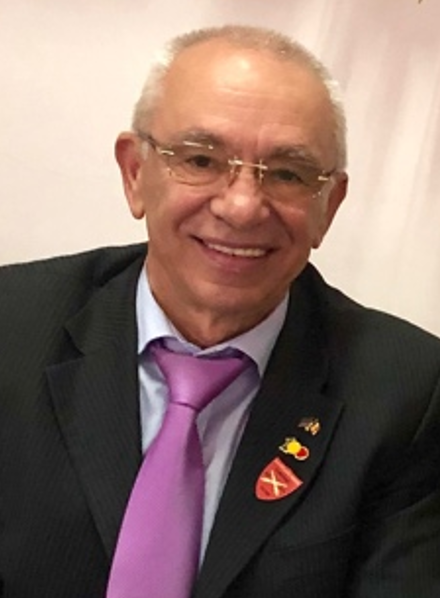
Historian Gheorghe Bichicean (b. 1951, Sibiu) holds a doctorate in history from the Faculty of History, University of Bucharest. He carried out a prodigious teaching activity, between 2012 and 2016, being rector of the Romanian-German University in Sibiu. Doctor Honoris Causa and Honorary Senator of the International Institute of Management - IMI-NOVA from Chisinau (Republic of Moldova); Honorary Senator of the Academy of Land Forces "Nicolae Bălcescu" from Sibiu. He obtained numerous awards, including the Medal of Honor of the University "Kujawy and Pomorze University" in Bydgoscz (Poland) and the Diploma of Excellence of the "Wilhelm Löhe University" in Fürth (Germany), the Order of "Masonic Merit in the rank of Commander" and the medal "Cultural Masonic Merit" 1st class. Founding editor of the magazine "Gnosis" and member of the Masonic Research Society "Quatuor Coronati" in Bayreuth, Germany. He wrote and published over 125 contributing studies in specialized magazines and 39 books in prestigious publishing houses in the country. At the Editura Universitara din Bucuresti he published: "Freemasonry and the myth of Horea", "Alexandru Vaida Voevod". Freemason and politician", "From the History of Freemasonry. Bălcescu and the secret societies", "The United Principalities before Europe. A manifesto of Prince Gheorghe D. Bibescu". A medallion of the historian Gheorghe Bichicean, including his scientific activity, is in the "Encyclopedia of representatives of Romanian historical writing", work edited by the Romanian Academy (vol. I, 2021).
FOREWORD / 9
PROLEGOMENA TO THE FIRST EDITION / 17
CONSPIRACY AND CONSPIRACY THEORY / 24
CONSPIRACY AND THEORY THROUGH CONCEPTUAL DELIMITATIONS / 24
CONSPIRACY THEORY AND ANTI-MASONIC "FLAVOR" / 46
THE TEMPTATION OF THE BALKANS. FROM CONTEXT TO PRETEXT: SARAJEVO 1914 / 56
SERBIA AND THE SECRET ORGANIZATIONS IN THE Whirlpool of CONSPIRACIES / 82
NARODNA ODBRANA / 82
CRNA RUKA / UJEDINJENJE ILI DEATH / 90
THE RETURN OF THE WHITE HAND AND THE END OF APIS. THESSALONIKI 1917 / 101
MLADA BOSNIA UNDER THE SIGN OF MAZZINI / 114
JUNE 28, 1914. THE LAST WALTZ / 144
THE LEAP IN THE DARK / 144
THE LAST WALTZ... / 177
THE DAY THAT CHANGED THE WORLD / 209
A FREEMASON ABOUT THE WAR AND THE "PLOT" OF THE KINGS IN ROMANIA / 277
A JUDICIAL PARODY / 286
THE RHETORIC OF QUESTIONS / 286
THE GREAT TRIAL / 295
AND THE MASONIC INVOCATION / 295
TRANSCRIPT OF THE SARAJEVO PROCESS / 330
PHAROS: DER PROZEß GEGEN DIE ATTENTÄTER VON SARAJEWO / 330
MOUSSET: L'ATTENTAT DE SARAJEVO D'APRÈS LES STÉNOGRAMMES / 375
The thesis of the involvement of Freemasonry. Pros and cons / 396
Prosecutor Franjo Svara's indictment. Lawyers and pleaders / 400
Verdict / 407
SARAJEVO MASONIC CONSPIRACY / 409
FREEMASONIC SERBIA UNTIL 1914 / 409
FREEMASONRY AND THE BEHIND THE CONSPIRACY / 425
CONJURORS, ACCUSED AND FREEMASONS / 451
CRITICISM OF ARCHIVE DOCUMENTS. POSSIBLE CONSPIRACY POSTURES / 471
AFTERFACE TO HERO CULT / 489
BIBLIOGRAPHY AND ABBREVIATIONS / 507
ANNEXES / 547
PROLEGOMENA TO THE FIRST EDITION / 17
CONSPIRACY AND CONSPIRACY THEORY / 24
CONSPIRACY AND THEORY THROUGH CONCEPTUAL DELIMITATIONS / 24
CONSPIRACY THEORY AND ANTI-MASONIC "FLAVOR" / 46
THE TEMPTATION OF THE BALKANS. FROM CONTEXT TO PRETEXT: SARAJEVO 1914 / 56
SERBIA AND THE SECRET ORGANIZATIONS IN THE Whirlpool of CONSPIRACIES / 82
NARODNA ODBRANA / 82
CRNA RUKA / UJEDINJENJE ILI DEATH / 90
THE RETURN OF THE WHITE HAND AND THE END OF APIS. THESSALONIKI 1917 / 101
MLADA BOSNIA UNDER THE SIGN OF MAZZINI / 114
JUNE 28, 1914. THE LAST WALTZ / 144
THE LEAP IN THE DARK / 144
THE LAST WALTZ... / 177
THE DAY THAT CHANGED THE WORLD / 209
A FREEMASON ABOUT THE WAR AND THE "PLOT" OF THE KINGS IN ROMANIA / 277
A JUDICIAL PARODY / 286
THE RHETORIC OF QUESTIONS / 286
THE GREAT TRIAL / 295
AND THE MASONIC INVOCATION / 295
TRANSCRIPT OF THE SARAJEVO PROCESS / 330
PHAROS: DER PROZEß GEGEN DIE ATTENTÄTER VON SARAJEWO / 330
MOUSSET: L'ATTENTAT DE SARAJEVO D'APRÈS LES STÉNOGRAMMES / 375
The thesis of the involvement of Freemasonry. Pros and cons / 396
Prosecutor Franjo Svara's indictment. Lawyers and pleaders / 400
Verdict / 407
SARAJEVO MASONIC CONSPIRACY / 409
FREEMASONIC SERBIA UNTIL 1914 / 409
FREEMASONRY AND THE BEHIND THE CONSPIRACY / 425
CONJURORS, ACCUSED AND FREEMASONS / 451
CRITICISM OF ARCHIVE DOCUMENTS. POSSIBLE CONSPIRACY POSTURES / 471
AFTERFACE TO HERO CULT / 489
BIBLIOGRAPHY AND ABBREVIATIONS / 507
ANNEXES / 547
Great historical events require a trigger moment. He should not be the bearer of violence, but most of the time the changes took place either in this way. The moment that set in motion the chain of events that culminated in World War I was the assassination of Archduke Franz Ferdinand and his wife Sophie. The preparations for his visit to Bosnia-Herzegovina encapsulate the essential features of the empire whose throne he was to inherit, and the plot throws a revealing light on the currents and countercurrents in the Balkans, the most troubled region of Europe in the years before 1914. The chaos, the confusion and coincidences at Sarajevo on June 28, 1914, set the tone for the crisis that preceded the first war of such magnitude since the defeat of Napoleon Bonaparte nearly a century earlier.
The 20th century was one of nationalism and centralism, and "Sarajevo 1914" is a symbol of this. He became a synonym for the imminent danger of war, was considered a warning sign for any event with catastrophic consequences. The consistent appeal of the Sarajevo reference, and how much it has become a metaphor for war-inducing and world-changing events, has shaped a specific historical and even romanticized literature.
Sarajevo is the beginning and the end. The year 1914 began with an assassination, followed by an escalation of "national honor". "Sarajevo 1914" is largely associated with two attributes: "inducing war" and "changing the world". This gives it remarkable symbolic significance when looking back at the overall history of bombings in the 20th century. Because of its connection to the First World War, "Sarajevo 1914" developed the embodiment of the assassination attempt that can change the world. Of course, there were attacks before and after, but none are associated with such consequences as "Sarajevo 1914".
The First World War began with Sarajevo, where under the sun of Sunday June 28, 1914 - a symbolic date, the anniversary of the epic Serbian resistance against the Ottomans, the battle of Kosovo Polje on June 28, 1389 - all the anger and despair of some young people manifested itself, because the sophisticated political alchemy of international relations failed to govern and direct a situation in which grievances were constantly on the verge of exploding.
That day, young Gavrilo Princip was standing on a street corner in the Bosnian city of Sarajevo with a gun in his hand. With two gunshots he opened the way for the first world conflagration. It was the first shot of the First World War heard around the world.
Even if no one could have guessed the catastrophic dimensions and losses of the First World War, projecting the consequences on the assassination, it becomes in itself an event with a special symbolism. The "fascination" with "Sarajevo 1914" can certainly be explained by the enormous discrepancy between the murder of an heir to the throne by a schoolboy on the "European periphery" and the catastrophic consequences worldwide.
No other assassination attempt has had such a result, and this ensures for "Sarajevo 1914" an established reference. It is the reason why Sarajevo is considered the "mother of all modern attacks". Not in the sense that the assassination there carries the burden of subsequent assassination attempts, but in the sense that the interpretation of the assassination in Sarajevo shaped a matrix that influenced the perception of subsequent assassinations. It could also be argued that the connection between Sarajevo and the outbreak of the First World War helped to change the perception of the assassinations in general, with particular attention being paid to the issue of the aftermath of the bombings. In other words, the attacks should have visible and as drastic consequences as possible.
The unique position of the "Sarajevo 1914" assassination in the Western imagination does not mean that all subsequent assassinations have stood in its shadow. But this raises the question not only of political analysis, but also of textbooks and education. Essentially, textbooks are a reflection of the time in which they were created, as well as the historiography from which they emerged. Therefore, the images in textbooks are mostly copies of historiographical elaborations, and the amount of writings and the way of presentation in textbooks can always be a measure of the importance of contemporary socio-political and educational objectives in relation to a certain personality or event of the past, and conversely, how important a particular part of the past is to contemporary socio-political and educational discourse.
The historical nonconformist A.J.P. Taylor had a message for historians looking for conspiracies behind the Sarajevo assassination:
"Nine-tenths of what has been written about the assassination in Sarajevo turns out to be useless rubbish, tainted by a determination to uncover an elaborate conspiracy somewhere. Historians find it hard to believe that some people were prepared to die for their beliefs without order or reward. It was the same here. The simplest explanation turns out to be the true one. Which happens frequently."
The heir to the throne of the powerful Austro-Hungarian Empire was murdered by a group of high school students. The plot that led to the assassination in Sarajevo resembled more the novels of Dostoevsky than the episodes of the political history of the old continent. It is more important to know that the "enthusiasts, dreamers and fanatics" group of amateur conspirators had not been indoctrinated. They assembled of their own initiative, read and debated, as best they could, what they themselves had chosen to do.
Since then, postwar memoirs have often been colored by considerations other than the search for historical truth. As a result, it is not surprising that "Sarajevo 1914" turned out to be a kind of "cornucopia" for conspiratorial fantasies. Such is the nature of the fact and the circumstances surrounding it, that it will probably never be possible to reveal it completely. That there is not and never has been a person who knows everything there is to know.
Taylor also drew attention to another very important aspect of the July crisis:
“We know what happened between June 28 and August 4, 1914, in more detail than we know about any other five weeks in history. Indeed, if we cannot understand and agree with these events, we shall never understand or agree with anything. As this work can demonstrate, occasionally historians and journalists are still looking for conspiracies, and the Sarajevo attempt has proved an attractive subject for such interpretations.
The second part of Taylor's observation is a caveat. Are historians really able to understand or agree on this tragic event? They are about many aspects, for sure. However, even more than a century after the Sarajevo assassination, historians seem unable to agree on Gavrilo Princip's role in the five weeks leading up to the fatal four weeks of the July 1914 crisis.
Conspiracy theories always surround important events. Not surprisingly, the assassination that sparked World War I led to controversy and speculation. This goes beyond arguments about the role of the Crna Ruka organization in organizing the attack or the complicity of the Serbian government. There have long been opinions that something nefarious was afoot, a plot hatched by Austro-Hungarian officials who wanted the "troublesome" archduke and his morganatic wife removed. Even just thinking about Franz Ferdinand will make him emperor. His plans to reorganize the empire threatened conservative notions, and many feared that, despite his abdication, the archduke would find a way to crown his wife as empress and name his son as the great heir to the throne. It is a surprising idea that the assassination in Sarajevo would have been encouraged by certain elements in Austria who did not react when the danger was pointed out to them.
Then there are allegations that Imperial Russia, Serbia's strongest ally and a country determined to eliminate Austria as an influence in the Balkans, actively promoted the assassination. According to this theory, Russia feared that when Franz Ferdinand came to the throne, he would unite the separated South Slavs under the Habsburg banner and thus prevent Romanov expansion into the Balkans. These two pseudo "theories" unconvincingly interpret the "Sarajevo 1914" episode.
Was an "excuse" or "pretext" needed to wage a war against the ever-present threat that was then Serbia? And then, we might say, what better way was there than to provoke an incident in Sarajevo to justify Austrian aggression against Belgrade? Because, as Taylor very well concluded, the Austrian government was not too concerned with punishing Gavrilo Princip. He wanted to punish a different crime - the crime Serbia committed by existing as a free nation-state.
Some questions will forever remain without a clear answer, but the trauma that followed the day "Sarajevo 1914" is undeniable. The existing evidence was analyzed extensively and the background of the plot was carefully examined in minute detail. Removing the impossible and excluding the improbable - and leaving aside the Jews, the Freemasons, the Narodna Odbrana, Crna Ruka and Mlada Bosna organizations and all the other "basic elements" of conspiracy theories - it is possible to make a number of deductions which, although not conclusive, they have the advantage of plausibility. When the Austro-Hungarian foreign minister, Count Leopold von Berchtold, had hurried back to the capital from his castle at Buchlovice in Moravia, in his first meetings with foreign diplomats he left no doubt that "the threads of the conspiracy ... they gathered in Belgrade".
There are a number of arguments that led me to complete the book in this second edition: new writings, new opinions, more or less convincing explanations appearing in the literature specific to the theme. Especially the conspiracy theory.
Visiting Sarajevo in July 2022 to see the site of the attack, the town hall, the Museum near the Latin Bridge - where I donated a copy of this first edition book - as well as the imposing Mausoleum erected in the city cemetery in memory to the 7 assassins, completed the arguments for which I considered this edition necessary.
July, 2024
The 20th century was one of nationalism and centralism, and "Sarajevo 1914" is a symbol of this. He became a synonym for the imminent danger of war, was considered a warning sign for any event with catastrophic consequences. The consistent appeal of the Sarajevo reference, and how much it has become a metaphor for war-inducing and world-changing events, has shaped a specific historical and even romanticized literature.
Sarajevo is the beginning and the end. The year 1914 began with an assassination, followed by an escalation of "national honor". "Sarajevo 1914" is largely associated with two attributes: "inducing war" and "changing the world". This gives it remarkable symbolic significance when looking back at the overall history of bombings in the 20th century. Because of its connection to the First World War, "Sarajevo 1914" developed the embodiment of the assassination attempt that can change the world. Of course, there were attacks before and after, but none are associated with such consequences as "Sarajevo 1914".
The First World War began with Sarajevo, where under the sun of Sunday June 28, 1914 - a symbolic date, the anniversary of the epic Serbian resistance against the Ottomans, the battle of Kosovo Polje on June 28, 1389 - all the anger and despair of some young people manifested itself, because the sophisticated political alchemy of international relations failed to govern and direct a situation in which grievances were constantly on the verge of exploding.
That day, young Gavrilo Princip was standing on a street corner in the Bosnian city of Sarajevo with a gun in his hand. With two gunshots he opened the way for the first world conflagration. It was the first shot of the First World War heard around the world.
Even if no one could have guessed the catastrophic dimensions and losses of the First World War, projecting the consequences on the assassination, it becomes in itself an event with a special symbolism. The "fascination" with "Sarajevo 1914" can certainly be explained by the enormous discrepancy between the murder of an heir to the throne by a schoolboy on the "European periphery" and the catastrophic consequences worldwide.
No other assassination attempt has had such a result, and this ensures for "Sarajevo 1914" an established reference. It is the reason why Sarajevo is considered the "mother of all modern attacks". Not in the sense that the assassination there carries the burden of subsequent assassination attempts, but in the sense that the interpretation of the assassination in Sarajevo shaped a matrix that influenced the perception of subsequent assassinations. It could also be argued that the connection between Sarajevo and the outbreak of the First World War helped to change the perception of the assassinations in general, with particular attention being paid to the issue of the aftermath of the bombings. In other words, the attacks should have visible and as drastic consequences as possible.
The unique position of the "Sarajevo 1914" assassination in the Western imagination does not mean that all subsequent assassinations have stood in its shadow. But this raises the question not only of political analysis, but also of textbooks and education. Essentially, textbooks are a reflection of the time in which they were created, as well as the historiography from which they emerged. Therefore, the images in textbooks are mostly copies of historiographical elaborations, and the amount of writings and the way of presentation in textbooks can always be a measure of the importance of contemporary socio-political and educational objectives in relation to a certain personality or event of the past, and conversely, how important a particular part of the past is to contemporary socio-political and educational discourse.
The historical nonconformist A.J.P. Taylor had a message for historians looking for conspiracies behind the Sarajevo assassination:
"Nine-tenths of what has been written about the assassination in Sarajevo turns out to be useless rubbish, tainted by a determination to uncover an elaborate conspiracy somewhere. Historians find it hard to believe that some people were prepared to die for their beliefs without order or reward. It was the same here. The simplest explanation turns out to be the true one. Which happens frequently."
The heir to the throne of the powerful Austro-Hungarian Empire was murdered by a group of high school students. The plot that led to the assassination in Sarajevo resembled more the novels of Dostoevsky than the episodes of the political history of the old continent. It is more important to know that the "enthusiasts, dreamers and fanatics" group of amateur conspirators had not been indoctrinated. They assembled of their own initiative, read and debated, as best they could, what they themselves had chosen to do.
Since then, postwar memoirs have often been colored by considerations other than the search for historical truth. As a result, it is not surprising that "Sarajevo 1914" turned out to be a kind of "cornucopia" for conspiratorial fantasies. Such is the nature of the fact and the circumstances surrounding it, that it will probably never be possible to reveal it completely. That there is not and never has been a person who knows everything there is to know.
Taylor also drew attention to another very important aspect of the July crisis:
“We know what happened between June 28 and August 4, 1914, in more detail than we know about any other five weeks in history. Indeed, if we cannot understand and agree with these events, we shall never understand or agree with anything. As this work can demonstrate, occasionally historians and journalists are still looking for conspiracies, and the Sarajevo attempt has proved an attractive subject for such interpretations.
The second part of Taylor's observation is a caveat. Are historians really able to understand or agree on this tragic event? They are about many aspects, for sure. However, even more than a century after the Sarajevo assassination, historians seem unable to agree on Gavrilo Princip's role in the five weeks leading up to the fatal four weeks of the July 1914 crisis.
Conspiracy theories always surround important events. Not surprisingly, the assassination that sparked World War I led to controversy and speculation. This goes beyond arguments about the role of the Crna Ruka organization in organizing the attack or the complicity of the Serbian government. There have long been opinions that something nefarious was afoot, a plot hatched by Austro-Hungarian officials who wanted the "troublesome" archduke and his morganatic wife removed. Even just thinking about Franz Ferdinand will make him emperor. His plans to reorganize the empire threatened conservative notions, and many feared that, despite his abdication, the archduke would find a way to crown his wife as empress and name his son as the great heir to the throne. It is a surprising idea that the assassination in Sarajevo would have been encouraged by certain elements in Austria who did not react when the danger was pointed out to them.
Then there are allegations that Imperial Russia, Serbia's strongest ally and a country determined to eliminate Austria as an influence in the Balkans, actively promoted the assassination. According to this theory, Russia feared that when Franz Ferdinand came to the throne, he would unite the separated South Slavs under the Habsburg banner and thus prevent Romanov expansion into the Balkans. These two pseudo "theories" unconvincingly interpret the "Sarajevo 1914" episode.
Was an "excuse" or "pretext" needed to wage a war against the ever-present threat that was then Serbia? And then, we might say, what better way was there than to provoke an incident in Sarajevo to justify Austrian aggression against Belgrade? Because, as Taylor very well concluded, the Austrian government was not too concerned with punishing Gavrilo Princip. He wanted to punish a different crime - the crime Serbia committed by existing as a free nation-state.
Some questions will forever remain without a clear answer, but the trauma that followed the day "Sarajevo 1914" is undeniable. The existing evidence was analyzed extensively and the background of the plot was carefully examined in minute detail. Removing the impossible and excluding the improbable - and leaving aside the Jews, the Freemasons, the Narodna Odbrana, Crna Ruka and Mlada Bosna organizations and all the other "basic elements" of conspiracy theories - it is possible to make a number of deductions which, although not conclusive, they have the advantage of plausibility. When the Austro-Hungarian foreign minister, Count Leopold von Berchtold, had hurried back to the capital from his castle at Buchlovice in Moravia, in his first meetings with foreign diplomats he left no doubt that "the threads of the conspiracy ... they gathered in Belgrade".
There are a number of arguments that led me to complete the book in this second edition: new writings, new opinions, more or less convincing explanations appearing in the literature specific to the theme. Especially the conspiracy theory.
Visiting Sarajevo in July 2022 to see the site of the attack, the town hall, the Museum near the Latin Bridge - where I donated a copy of this first edition book - as well as the imposing Mausoleum erected in the city cemetery in memory to the 7 assassins, completed the arguments for which I considered this edition necessary.
July, 2024
If you want to express your opinion about this product you can add a review.
write a review
Similar products


The Imperfect Crime. Colonel Antonescu's Investigations - Dan Antonescu
In storms of steel. Second edition - Ernst Junger
Final analysis. The war that wasn't... war - Tudor Pacuraru
The Quest for Power: Europe 1815-1914 - Richard J. Evans

Operation Barbarossa. Eastern Front, 1941. Total War - Jean Lopez Lasha Otkhmezuri
Life at the Murders. Colonel Antonescu's Investigations - Dan Antonescu