📦 FREE SHIPPING OVER 120 RON
Order Tracking Individuals / Sales: 0745 200 357 / Orders Legal Entities: 0721 722 783
Manuscript proposals: [email protected] : 0745 204 115

 EN
EN  Romana
6359.png "Editura Universitară") Grammatical metalanguage in the foreign language classroom
Grammatical metalanguage in the foreign language classroom
![Grammatical metalanguage in the foreign language classroom [0]](https://gomagcdn.ro/domains/editurauniversitara.ro/files/product/medium/le-metalangage-grammatical-dans-la-classe-de-langue-etrangere-750475.jpg "Grammatical metalanguage in the foreign language classroom [0]")
![Grammatical metalanguage in the foreign language classroom [1]](https://gomagcdn.ro/domains/editurauniversitara.ro/files/product/medium/le-metalangage-grammatical-dans-la-classe-de-langue-etrangere-400786.jpg "Grammatical metalanguage in the foreign language classroom [1]")
![Grammatical metalanguage in the foreign language classroom [1]](https://gomagcdn.ro/domains/editurauniversitara.ro/files/product/original/le-metalangage-grammatical-dans-la-classe-de-langue-etrangere-750475.jpg "Grammatical metalanguage in the foreign language classroom [1]")
![Grammatical metalanguage in the foreign language classroom [2]](https://gomagcdn.ro/domains/editurauniversitara.ro/files/product/original/le-metalangage-grammatical-dans-la-classe-de-langue-etrangere-400786.jpg "Grammatical metalanguage in the foreign language classroom [2]")
Publisher: Editura Universitară
Author: Elisabeta Ana Iuliana Linea
Edition: I
Pages: 342
Publisher year: 2025
ISBN: 978-606-28-2039-8
DOI: https://doi.org/10.5682/9786062820398
Product Code:
9786062820398
Do you need help?
0745 200 357
- Description
- Authors
- More details
- Content
- Reviews (0)
At the end of this work, I would like to express my sincere thanks to all those who contributed to the successful completion of this research.
I would like to thank my thesis supervisor, Professor Monica Vlad, for the trust she showed throughout my research, for her commitment, availability, and support. I thank her for dedicating hours of her time to my research, for her support, for her attention and patience in meticulously editing my pages, for her detailed explanations, suggestions, and proofreading, as well as for the advice that guided me in organizing the content and using the corpus. I particularly thank her for the opportunities she gave me to participate in international conferences in Latvia, Armenia, and France, enriching experiences that opened up new perspectives for my doctoral research.
My thanks also go to the members of the monitoring committee, Professor Mioara Codleanu, Professor Sandina Vasile, and Professor Laura Mureşanu, for their interest in my research, for the scientific support provided, for sharing their insights into my thesis topic, and for their invaluable advice.
I would like to thank the members of the jury who agreed to read and evaluate my work in its final form.
I would like to warmly thank my colleagues, teachers of French and English as a foreign language in high schools in Constanţa, who allowed me to enter their classrooms to record grammar lessons. Many thanks for giving me the opportunity to compile the corpus of my research, an extremely important body of work for analyzing what happens in foreign language classrooms in Romania and which provides a rich testimony to the pedagogical practices of language teachers in teaching grammar.
A huge thank you to my colleagues and friends on my doctoral team who encouraged me to continue and who supported me and helped me overcome times of crisis and discouragement.
I thank my entire family for their unconditional and constant help and support. Thank you all for being by my side at all times.
I would like to thank my thesis supervisor, Professor Monica Vlad, for the trust she showed throughout my research, for her commitment, availability, and support. I thank her for dedicating hours of her time to my research, for her support, for her attention and patience in meticulously editing my pages, for her detailed explanations, suggestions, and proofreading, as well as for the advice that guided me in organizing the content and using the corpus. I particularly thank her for the opportunities she gave me to participate in international conferences in Latvia, Armenia, and France, enriching experiences that opened up new perspectives for my doctoral research.
My thanks also go to the members of the monitoring committee, Professor Mioara Codleanu, Professor Sandina Vasile, and Professor Laura Mureşanu, for their interest in my research, for the scientific support provided, for sharing their insights into my thesis topic, and for their invaluable advice.
I would like to thank the members of the jury who agreed to read and evaluate my work in its final form.
I would like to warmly thank my colleagues, teachers of French and English as a foreign language in high schools in Constanţa, who allowed me to enter their classrooms to record grammar lessons. Many thanks for giving me the opportunity to compile the corpus of my research, an extremely important body of work for analyzing what happens in foreign language classrooms in Romania and which provides a rich testimony to the pedagogical practices of language teachers in teaching grammar.
A huge thank you to my colleagues and friends on my doctoral team who encouraged me to continue and who supported me and helped me overcome times of crisis and discouragement.
I thank my entire family for their unconditional and constant help and support. Thank you all for being by my side at all times.
Acknowledgments /7
Introduction / 15
1.0. Preamble /15
I.1. Construction of the Research Question /15
I.2. General Research Question /18
I.3. Initial Hypotheses /18
I.4. Research Objectives /19
I.5. Motivation for the Research /20
I.6. Originality of the Thesis /22
I.7. Thesis Corpus /23
I.8. Thesis Articulations /24
Chapter 1: Theoretical Articulations of the Research /29
1.0. Preamble /29
1.1. Theoretical Approach to Metalanguage /30
1.2. Grammatical Metalanguage in the Foreign Language Classroom /36
1.3. Didactic Transposition /43
1.4. External Didactic Transposition: The Curriculum and the Textbook /47
1.5. Internal Didactic Transposition through Teacher Discourse /51
1.5.1. The Particularities of Explanatory Discourse in a School Context /51
1.5.2. The Particularities of Teacher Discourse in a Foreign Language Classroom /53
1.6. Grammatical Explanation /58
1.6.1. Discourse with Explanatory Aims /58
1.6.2. The Structure of the Explanatory Sequence in a Foreign Language Classroom /61
1.7. The Didacticization of Scientific Knowledge through Teacher Discourse /65
1.8. Learners' Metalinguistic Repertoire /68
Provisional Assessment /70
Chapter 2 Metalanguage in School Discourse /72
2.0. Preamble /72
2.1. The Place of Grammar in the Teaching and Learning of Foreign Languages in the Romanian Context /73
2.2. The School Curriculum /75
2.3. Analysis of FLE and EFL Textbooks Approved for Language Teaching in the Romanian System /84
2.3.1. The Presence of Metalanguage Related to Verb Tenses in External Didactic Transposition in FLE Textbooks /84
2.3.2. The Presence of Metalanguage Related to Verb Tenses in External Didactic Transposition in EFL Textbooks /94
2.4. The Presence of Metalanguage Related to Verb Tenses in Teachers' Discourse /103
2.4.1. Description of the Corpus of Recordings of FLE and EFL Classes /103
2.4.2. Transcription Process for Foreign Language Class Recordings /105
2.4.3. Difficulties Encountered in Building and Using the Corpus/107
2.5. Working Method/109
2.5.1. Research Methodology/109
Chapter 3 Definition and Example as Explanatory Methods in the Foreign Language Classroom /115
3.0. Preamble /115
3.1. Definition as a Method of Didactic Explanation /116
3.1.1. Scientific Definition /117
3.1.2. Didactic Definition /120
3.2. Example as a Method of Didactic Explanation /123
3.3. Analysis of the Status and Functioning of Definition and Example in Foreign Language Classrooms /127
3.3.1. Qualitative Analysis of the Grammatical Metalanguage Present in Definitions and Examples in the Foreign Language Classroom /128
3.3.1.1. The Use of TNS in Didactic Definition to Explain TEG /130
3.3.1.2. The Use of Grammatical Examples to Define TEGs in the Didactic Definition / 132
3.3.1.3. The Use of Comparison of Two or More TEGs in the Didactic Definition / 139
3.3.2. Methods of Constructing the Didactic Definition in the Teacher's Explanatory Discourse / 151
3.3.2.1. The Use of Personal Pronouns in Constructing the Didactic Definition / 151
3.3.2.2. The Use of Mother Tongue and Phatic Elements in Constructing the Didactic Definition of TEGs / 154
Partial Conclusions / 160
Chapitre 4 La reformulation comme procédé explicatif dans la classe de langue étrangère /162
4.0. Préambule /162
4.1. Perspectives théoriques sur la reformulation/163
4.1.1. La définition des concepts de reformulation et de paraphrase /163
4.1.2. Sous-catégories de reformulation /165
4.1.2.1. La reformulation en fonction de la source des énoncés reformulés /165
4.1.2.2. La reformulation paraphrastique et la refor-mulation non-paraphrastique /166
4.1.3. Les marqueurs de reformulation /169
4.2. La reformulation pédagogique comme trait caractéristique du discours de l’enseignant/171
4.3. La reformulation en classe de langue étrangère /175
4.3.0. La reformulation en contexte scolaire /175
4.3.1. Analyse des reformulations dans le discours de l’enseignant de FLE et d’ALE / 176
4.3.2. La reformulation en construction /vs. / la reformulation synthèse /178
4.3.2.1. Reformulation en construction /178
4.3.2.2. Reformulation synthèse /184
4.3.3. La reformulation inductive / vs. / la reformulation déductive /191
4.3.3.1. Reformulation inductive /191
4.3.3.2. Reformulation déductive /198
4.3.4. La reformulation sans apport de nouvelles informations grammaticales / vs. / la reformulation avec apport de nouvelles informations grammaticales /203
4.3.4.1. Reformulation qui n’apporte pas de nouvelles informations grammaticales /203
4.3.4.2. Reformulation qui apporte de nouvelles informations grammaticales /206
Conclusions partielles /211
Chapter 5 Metaphor as an Explanatory Device in the Foreign Language Classroom /214
5.0. Preamble /214
5.1. Theoretical Approach(es) to Semantic Anomaly and Metaphor /215
5.2. Metaphor as a Method for Teaching Grammatical Metalanguage in the Discourse of FLE and ALE Teachers /221
5.2.1. Qualitative Analysis of Metaphor in FLE and ALE Classes /224
5.2.1.1. Intra- and Inter-Sentential Metaphors /225
5.2.1.1.1. Intra- or Simple Metaphors /226
5.2.1.1.2. Inter-Sentential Metaphors /227
5.2.2.0. The category of metaphors constructed according to the morphological criterion /233
5.2.2.1. The nominal metaphor as a means of teaching grammatical metalanguage in the discourse of the foreign language teacher /234
5.2.2.2. The verbal metaphor as a means of teaching grammatical metalanguage in the discourse of the foreign language teacher /236
5.2.2.3. The Adjectival Metaphor as a Means of Teaching Grammatical Metalanguage in the Discourse of a Foreign Language Teacher /242
5.2.2.4. The Adverbial and Prepositional Metaphor as a Means of Teaching Grammatical Metalanguage in the Discourse of a Foreign Language Teacher /243
5.2.2.5. Metalinguistic Structures Presenting Combinatory Transgressions in the Foreign Language Grammar Classroom /244
5.3. The Main Classificatory Transgressions Present in Metaphors in the Language Classroom /253
Partial Conclusions /256
Chapter 6 Code-Switching as an Explanatory Device in the Foreign Language Classroom /260
6.0. Preamble /260
6.1. Theoretical Approaches to Code-Switching /261
6.1.1. Definitions of Code-Switching (CS) /262
6.1.2. Functions of Code-Switching /263
6.2. Grammatical Metalanguage and Code-Switching /268
6.3. Practical Approach to CS /270
6.3.1. CS Used to Explain the Instructions or Statements of a Metalinguistic Activity /271
6.3.2. CS Used to Define or Explain the Meaning of a Metalinguistic Term or a Grammatical Rule /278
6.3.3. CA Used to Perform a Contrastive Analysis Between the Grammar of the Foreign Language and the Grammar of the Target Language /290
6.3.4. CA Used to Compare the Grammar of Two Foreign Languages (Studied or from the Same Family) /294
6.3.5. CA Used to Correct a Mistake/Error /297
6.3.6. CA Used to Systematize Acquisitions /299
6.3.7. CA Used as a Means of Translating a Term of the Grammatical Metalanguage /302
Partial Conclusions /308
Conclusions /313
Originality and Innovation of the Research /325
Limitations of the Research /326
Research Perspectives /327
Bibliography /328
Introduction / 15
1.0. Preamble /15
I.1. Construction of the Research Question /15
I.2. General Research Question /18
I.3. Initial Hypotheses /18
I.4. Research Objectives /19
I.5. Motivation for the Research /20
I.6. Originality of the Thesis /22
I.7. Thesis Corpus /23
I.8. Thesis Articulations /24
Chapter 1: Theoretical Articulations of the Research /29
1.0. Preamble /29
1.1. Theoretical Approach to Metalanguage /30
1.2. Grammatical Metalanguage in the Foreign Language Classroom /36
1.3. Didactic Transposition /43
1.4. External Didactic Transposition: The Curriculum and the Textbook /47
1.5. Internal Didactic Transposition through Teacher Discourse /51
1.5.1. The Particularities of Explanatory Discourse in a School Context /51
1.5.2. The Particularities of Teacher Discourse in a Foreign Language Classroom /53
1.6. Grammatical Explanation /58
1.6.1. Discourse with Explanatory Aims /58
1.6.2. The Structure of the Explanatory Sequence in a Foreign Language Classroom /61
1.7. The Didacticization of Scientific Knowledge through Teacher Discourse /65
1.8. Learners' Metalinguistic Repertoire /68
Provisional Assessment /70
Chapter 2 Metalanguage in School Discourse /72
2.0. Preamble /72
2.1. The Place of Grammar in the Teaching and Learning of Foreign Languages in the Romanian Context /73
2.2. The School Curriculum /75
2.3. Analysis of FLE and EFL Textbooks Approved for Language Teaching in the Romanian System /84
2.3.1. The Presence of Metalanguage Related to Verb Tenses in External Didactic Transposition in FLE Textbooks /84
2.3.2. The Presence of Metalanguage Related to Verb Tenses in External Didactic Transposition in EFL Textbooks /94
2.4. The Presence of Metalanguage Related to Verb Tenses in Teachers' Discourse /103
2.4.1. Description of the Corpus of Recordings of FLE and EFL Classes /103
2.4.2. Transcription Process for Foreign Language Class Recordings /105
2.4.3. Difficulties Encountered in Building and Using the Corpus/107
2.5. Working Method/109
2.5.1. Research Methodology/109
Chapter 3 Definition and Example as Explanatory Methods in the Foreign Language Classroom /115
3.0. Preamble /115
3.1. Definition as a Method of Didactic Explanation /116
3.1.1. Scientific Definition /117
3.1.2. Didactic Definition /120
3.2. Example as a Method of Didactic Explanation /123
3.3. Analysis of the Status and Functioning of Definition and Example in Foreign Language Classrooms /127
3.3.1. Qualitative Analysis of the Grammatical Metalanguage Present in Definitions and Examples in the Foreign Language Classroom /128
3.3.1.1. The Use of TNS in Didactic Definition to Explain TEG /130
3.3.1.2. The Use of Grammatical Examples to Define TEGs in the Didactic Definition / 132
3.3.1.3. The Use of Comparison of Two or More TEGs in the Didactic Definition / 139
3.3.2. Methods of Constructing the Didactic Definition in the Teacher's Explanatory Discourse / 151
3.3.2.1. The Use of Personal Pronouns in Constructing the Didactic Definition / 151
3.3.2.2. The Use of Mother Tongue and Phatic Elements in Constructing the Didactic Definition of TEGs / 154
Partial Conclusions / 160
Chapitre 4 La reformulation comme procédé explicatif dans la classe de langue étrangère /162
4.0. Préambule /162
4.1. Perspectives théoriques sur la reformulation/163
4.1.1. La définition des concepts de reformulation et de paraphrase /163
4.1.2. Sous-catégories de reformulation /165
4.1.2.1. La reformulation en fonction de la source des énoncés reformulés /165
4.1.2.2. La reformulation paraphrastique et la refor-mulation non-paraphrastique /166
4.1.3. Les marqueurs de reformulation /169
4.2. La reformulation pédagogique comme trait caractéristique du discours de l’enseignant/171
4.3. La reformulation en classe de langue étrangère /175
4.3.0. La reformulation en contexte scolaire /175
4.3.1. Analyse des reformulations dans le discours de l’enseignant de FLE et d’ALE / 176
4.3.2. La reformulation en construction /vs. / la reformulation synthèse /178
4.3.2.1. Reformulation en construction /178
4.3.2.2. Reformulation synthèse /184
4.3.3. La reformulation inductive / vs. / la reformulation déductive /191
4.3.3.1. Reformulation inductive /191
4.3.3.2. Reformulation déductive /198
4.3.4. La reformulation sans apport de nouvelles informations grammaticales / vs. / la reformulation avec apport de nouvelles informations grammaticales /203
4.3.4.1. Reformulation qui n’apporte pas de nouvelles informations grammaticales /203
4.3.4.2. Reformulation qui apporte de nouvelles informations grammaticales /206
Conclusions partielles /211
Chapter 5 Metaphor as an Explanatory Device in the Foreign Language Classroom /214
5.0. Preamble /214
5.1. Theoretical Approach(es) to Semantic Anomaly and Metaphor /215
5.2. Metaphor as a Method for Teaching Grammatical Metalanguage in the Discourse of FLE and ALE Teachers /221
5.2.1. Qualitative Analysis of Metaphor in FLE and ALE Classes /224
5.2.1.1. Intra- and Inter-Sentential Metaphors /225
5.2.1.1.1. Intra- or Simple Metaphors /226
5.2.1.1.2. Inter-Sentential Metaphors /227
5.2.2.0. The category of metaphors constructed according to the morphological criterion /233
5.2.2.1. The nominal metaphor as a means of teaching grammatical metalanguage in the discourse of the foreign language teacher /234
5.2.2.2. The verbal metaphor as a means of teaching grammatical metalanguage in the discourse of the foreign language teacher /236
5.2.2.3. The Adjectival Metaphor as a Means of Teaching Grammatical Metalanguage in the Discourse of a Foreign Language Teacher /242
5.2.2.4. The Adverbial and Prepositional Metaphor as a Means of Teaching Grammatical Metalanguage in the Discourse of a Foreign Language Teacher /243
5.2.2.5. Metalinguistic Structures Presenting Combinatory Transgressions in the Foreign Language Grammar Classroom /244
5.3. The Main Classificatory Transgressions Present in Metaphors in the Language Classroom /253
Partial Conclusions /256
Chapter 6 Code-Switching as an Explanatory Device in the Foreign Language Classroom /260
6.0. Preamble /260
6.1. Theoretical Approaches to Code-Switching /261
6.1.1. Definitions of Code-Switching (CS) /262
6.1.2. Functions of Code-Switching /263
6.2. Grammatical Metalanguage and Code-Switching /268
6.3. Practical Approach to CS /270
6.3.1. CS Used to Explain the Instructions or Statements of a Metalinguistic Activity /271
6.3.2. CS Used to Define or Explain the Meaning of a Metalinguistic Term or a Grammatical Rule /278
6.3.3. CA Used to Perform a Contrastive Analysis Between the Grammar of the Foreign Language and the Grammar of the Target Language /290
6.3.4. CA Used to Compare the Grammar of Two Foreign Languages (Studied or from the Same Family) /294
6.3.5. CA Used to Correct a Mistake/Error /297
6.3.6. CA Used to Systematize Acquisitions /299
6.3.7. CA Used as a Means of Translating a Term of the Grammatical Metalanguage /302
Partial Conclusions /308
Conclusions /313
Originality and Innovation of the Research /325
Limitations of the Research /326
Research Perspectives /327
Bibliography /328
If you want to express your opinion about this product you can add a review.
write a review
Similar products
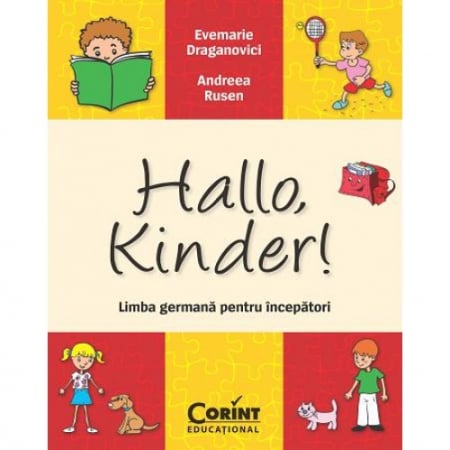
Hello, Kinder! German for beginners - Evemarie Draganovici, Andreea Rusen



Latin Course for Students of Theology Faculties - Florentina Nicolae